


Designing Beyond Viral Evolution: Peer-Reviewed First-in-Human Results for GB-0669
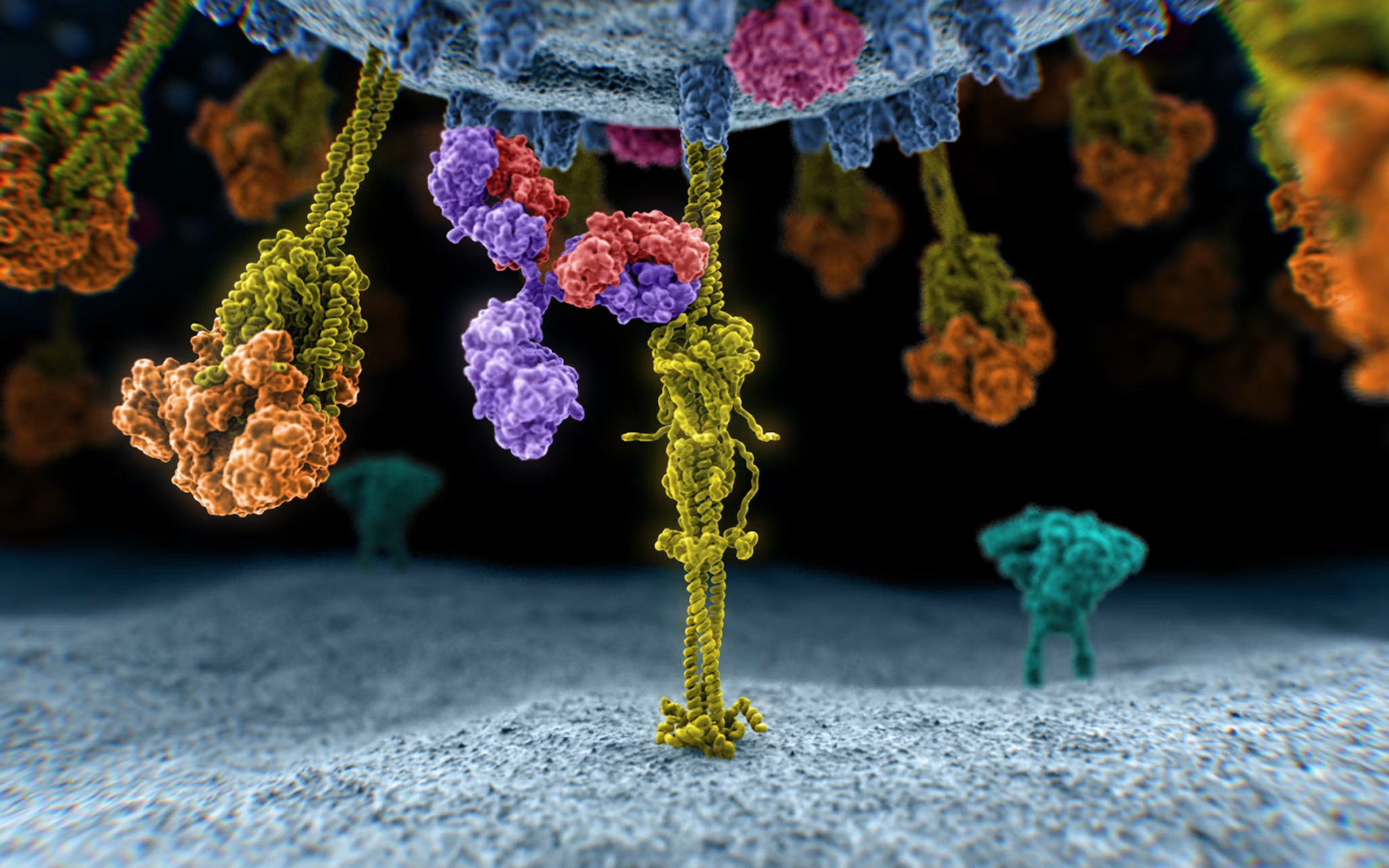
A peer-reviewed paper reporting the first-in-human Phase 1 study of GB-0669 is now published in “The Journal of Infectious Diseases.” The publication presents the full clinical evidence for an antibody designed with The Generate Platform to target the conserved S2 stem helix of SARS-CoV‑2, a region long considered undruggable by traditional methods.
This blog introduces the paper, what the study found, and why the results matter for the intentional design of future antiviral medicines. While GB-0669 has been deprioritized for internal development, the work established a viral-neutralization capability with enduring relevance for future pandemic preparedness.
The Target Was Conserved. A Viable Medicine Was Not.
During the COVID-19 pandemic, most therapeutic monoclonal antibodies targeted the receptor-binding domain of the SARS-CoV‑2 spike protein. Because this region is immunodominant, it came under intense selective pressure. As the virus evolved, new variants escaped antibodies that previously had been effective.
The S2 stem helix offered a different point of attack. Part of the viral fusion machinery, it is highly conserved across SARS-CoV‑2 variants and related sarbecoviruses. But antibodies against it are rare and generally weak neutralizers. The S2 domain had long been considered undruggable by traditional methods: The target was known, but conventional approaches had produced weak, poorly neutralizing binders unsuitable for clinical development.
Designing the Properties the Biology Required
The molecular task was not simply to bind the S2 stem helix. It was to preserve breadth while improving neutralization potency and ensuring antibody developability.
Starting from a low-potency antibody with the desired binding mode, The Generate Platform used structure-conditioned generative optimization — iterative, ML-driven protein generation with high-throughput experiments in the loop — to explore compatible sequence space. Measurements from an initial generation trained models to predict potency and affinity from sequence. Those models proposed a second generation that co-optimized both properties. Across 533 sequences generated and tested, GB-0669 was selected based on function, binding, and developability, with an LS mutation incorporated to extend half-life.
This is generative optimization in practice: Define the molecular outcome, generate sequences with intent, test them experimentally, and use the data to improve the next generation. The process produced a potent antibody with robust neutralization across all SARS-CoV‑2 variants tested and related sarbecoviruses.
The Clinic Put the Design to the Test
The randomized, double-blind, placebo-controlled Phase 1 study enrolled 51 healthy adults. Thirty-six received a single intravenous dose of GB-0669 across five ascending-dose cohorts from 100 mg to 2,400 mg, and 15 received placebo.
GB-0669 was well tolerated, with no dose-limiting toxicities or serious adverse events. All treatment-related adverse events were Grade 1 or 2. Exposure was dose-proportional through 2,400 mg, and the antibody demonstrated a terminal half-life of approximately 54 days.
Serum live-virus neutralization showed a clear dose-response relationship, with separation from placebo at 600 mg and 1,200 mg. At 1,200 mg, neutralizing-index modeling indicated activity above the estimated therapeutic threshold over the two-week interval assessed. Exploratory in vitro studies also showed improved neutralization profiles when GB-0669 was combined with remdesivir, nirmatrelvir, or molnupiravir. The paper concludes that the findings support further evaluation of a 1,200 mg dose for treating COVID-19 in immunocompromised individuals, including further study of antiviral combinations.
Clinical Data Are the Test
For a new approach to drug creation, the meaningful question is not whether a model can produce a plausible protein sequence. It is whether the resulting molecule can perform the task it was designed to perform and behave like a medicine in people.
This Phase 1 study was not designed to establish clinical efficacy. It tested whether an antibody engineered against a target previously considered undruggable by traditional methods would translate into humans with the safety, exposure, and pharmacodynamic activity needed to support further investigation. The peer-reviewed publication places that evidence in the scientific record.
The value of this work extends beyond a single program. It validates a viral-neutralization capability that can be applied to future targets and pathogens: Identify conserved biology, define the properties a therapeutic must have, and intentionally engineer a molecule to meet them. For the next viral threat, that means beginning not with a search for what nature has already made, but with a clear definition of what biology requires.
Further Reading & Resources
For deeper context and background materials, see the resources below:
The Journal of Infectious Diseases
Mechanism of Action Animation
GB-0669 Mechanism of Action
Related Blogs
Generative AI Unlocks Powerful Antibodies Against SARS-CoV‑2 and Future Viral Threats
From Computer to Clinic: How AI Unlocked the Potential of GB-0669